 We love unusual antiques and vintage items that provide a twist to an interior. After you have collected some Stickley and Roycroft, take a look at New York based Liza Sherman Antiques. The collection is beautiful and provides some great exclamation points for your space. Another great source for all kinds of antiques is 1stdibs.
Showing posts with label decorating. Show all posts
Showing posts with label decorating. Show all posts
Wednesday, December 03, 2008
Extraordinary Antiques
We love unusual antiques and vintage items that provide a twist to an interior. After you have collected some Stickley and Roycroft, take a look at New York based Liza Sherman Antiques. The collection is beautiful and provides some great exclamation points for your space. Another great source for all kinds of antiques is 1stdibs.


Thursday, November 30, 2006
More on lamps
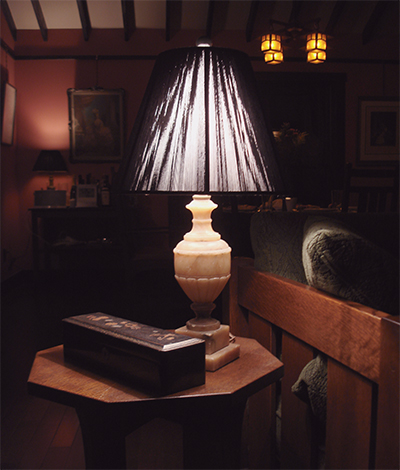 I love lamps. There is such a variety of them, and they really represent one of the easiest ways to alter the look of a room.
I often search for vintage lamps on Ebay, where there seems to be an endless supply. Now, we haven't given Ebay it's due, given that it was in invaluable resource for our house. I'll devote some future posts to it. Ebay has lamps of every size, shape, material and price. Frankly, it can be overwhelming. Mostly, I gravitate towards alabaster lamps, simply because I think that they're incredibly unique and timeless, but I've also found amazing lamps made of glass, wood, porcelain, bronze and iron. I don't get overly concerned about finding lamps in perfect condition: a small chip or dent here or there can add to their character. The lamp pictured here is made of Spanish alabaster, known for its warm, caramel tones.
When you purchase a vintage lamp, it pays to be on the safe side and rewire it. Even if a lamp's wiring seems to be in good condition, you just never know. Hardware and lighting stores sell very inexpensive rewiring kits, and many of them will do it for you for a nominal fee. If you're going for a more antique look, ask them about silk cords and vintage-style plugs, which seem to be more and more available these days.
Now for the lampshade, which I think is the trickiest element of the lamp. The golden rule here it to take your lamp with you when you shop for its shade. It's also not a bad idea to bring a light bulb with you. Much like the lamps themselves, lampshades come in every conceivable variety and price point. Two things to consider: first, pick a size of lampshade that will cover the lamp's socket completely when viewed at eye level; second, consider the kind of light you wish the lamp to give off. Paper will give bright, diffused light. Mica will give off a warm, amber glow. Silk will tend to diffuse the light the most, while directing it downward. My personal favorite is the silk string variety of lampshade, pictured above, because it creates a beautiful play of light as you walk past it. Darker lampshades tend to appear more formal, while lighter ones appear more casual. If you want to tie a room together, use the same type of lampshade on all your lamps. For a more cottagey, "collected over time" feeling, use a variety of lampshades in a room.
When placing lamps, I tend to put larger ones in living rooms and smaller ones in bedrooms, but you can mix up the sizes however you like. One rule of thumb: the eye will usually be drawn to the largest lamp in a room, so place that one where you think the focal point should be. Lamps can be much more than a utilitarian light source. They can be an easy and cost-effective to express your personal style.
Monday, November 27, 2006
A Christmas tree, by any other name ...
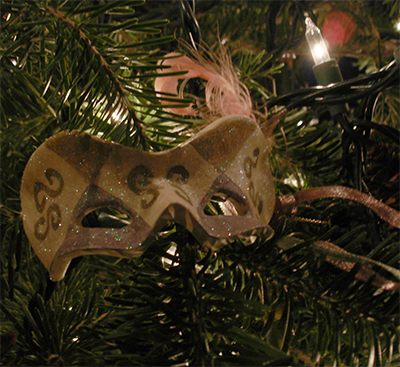
So we bought a Christmas tree this weekend. We just had to. One of the many advantages of the Adirondacks is that you can buy the freshest, most beautiful nine-foot tree you've every seen for only $25. In New York, things are rather different. The day after Thanksgiving, legions of Christmas tree farmers from all over the country bring their wares into Manhattan and set up shop on street corners everywhere. Typically, they stay with their trees 24 hours a day, staking out their territory and protecting their merchandise from theft. Of course, there are rewards for such vigilance. A nice Christmas tree in New York can run you about $200. If you're more interested in the Charlie Brown variety of Christmas tree, it will cost you around $50. In Manhattan, everything gets marked up.
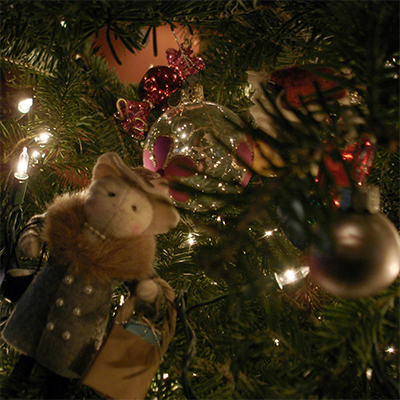
Before we built our house, we used to go for a middle-of-the-road tree: three feet tall, full and perfect. A cool $100. Exactly the size of tree you'd want in a tiny one-bedroom apartment. Over the years, we collected ornaments to suit it. Miniature glass balls, tiny figurines in wood, porcelain or glass. And, of course, a diminutive angel for the top. Our trees were always charming, if a bit Lilliputian. When we bought our first Adirondack tree, our ornaments, collected so carefully over the years, barely made a dent in it. Our tree had grown three-fold to a perfect nine-foot specimen, complete with lovely, delicate pine cones; but our ornaments couldn't keep up with it. So we scrambled to acquire enough large ornaments just to get us past the point of the ridiculous. Even now, our tree seems slightly disjunctive - an uneasy truce between our New York ornaments and their newer, larger Adirondack cousins.

Still, I love decorating the tree. As I pull out lights and ornaments left unseen for eleven months, all the little stories of their purchase come flooding back. Past trees, past holidays, even those from my earliest memory, reassert themselves in a way that seems appropriate only this time of year. I remember ornaments fashioned from construction paper in nursery school, or a nest I made of twigs, leaves and Elmer's glue in Kindergarten. For me, Christmas retains a constancy unlike any other holiday.
And yet, the tree means something different to me now. I am older, which is perhaps part of it. But also, our household is an interfaith one, combining the traditions of Judaism and Catholicism. So now, the tree acts as a convergence of two faiths. It is as much Hanukkah Bush as it is Christmas Tree. Today, as we were decorating the tree, we were talking about how the Tree of Life is such an important symbol in so many cultures and religions. We discussed the Tree of Knowledge and its significance in the Judeo-Christian tradition. And so our tree, whatever we call it, has become a Tree of Knowledge of sorts: knowledge of each other, of what we've been through together, of what we hope for the future. In the end, the tree is what we make of it.
Thursday, November 09, 2006
In Praise of the Picture Rail
 Many people don't know about picture rails these days, and yet they are one of the most practical and useful ways to embellish a house. A standard feature of many homes built in the past, picture rails are all but absent from modern interiors, with the exception of museums and galleries. Most of us hang pictures by nailing a hook into a wall, hanging a picture and finally standing back in the hope that the result is attractive and doesn't have to be adjusted. With a picture rail, much of the guesswork is unnecessary. A standard length of picture hanging cord and a decorative hook will help you achieve a lovely result every time. Moreover, you can change your pictures around easily and without leaving unsightly holes in your walls (especially important if you have plaster walls). So if you're building or renovating your home, consider installing a picture rail. It's surprisingly inexpensive, and it will dress up a home of any style immeasurably. Rejuvenation stocks picture rail hooks and cord in several styles and colors.
Monday, November 06, 2006
Building a Refuge in the Woods
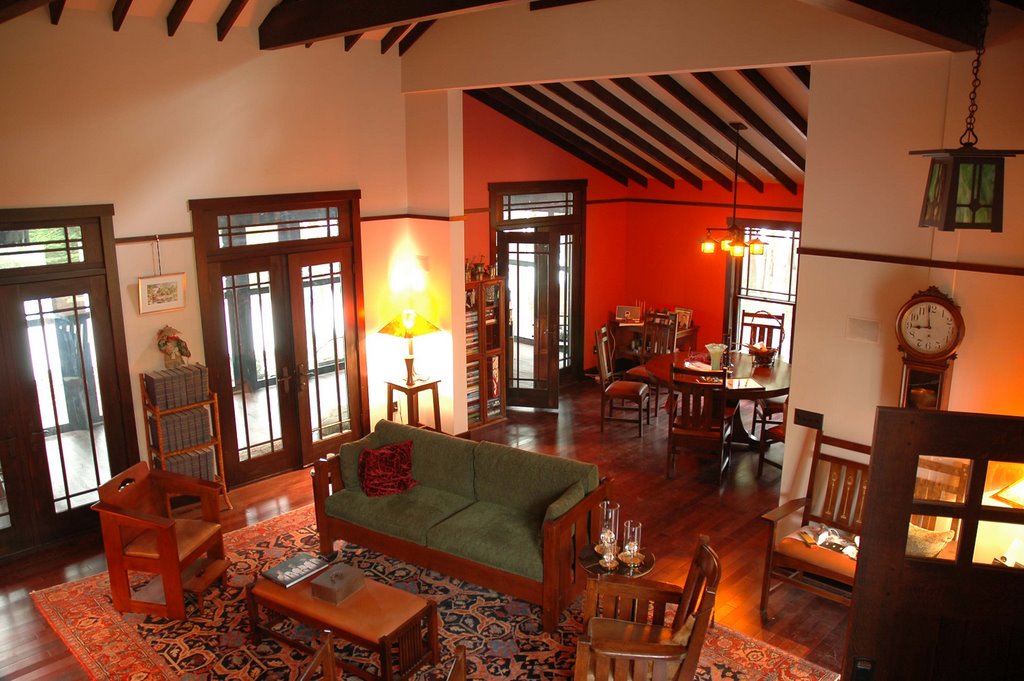 The success of any interior design depends on the ability to add layer upon layer of objects, furniture, art, decoration, color - and blend them seamlessly. A smaller space, like this one, allows for a more intimate feeling when sitting in any of its sitting areas, but provides views from every window out to the woods and water beyond. Changing ceiling height provides variation and differentiates one space from another, even as they are next to each other. Begin with a sense of yourself, your taste and style and built on it with bold choices of paint color and beautiful objects that are meaningful to you. It is a lifelong project, never done, always waiting for the next piece to expand and enrich the space for you and your guests.
Saturday, November 04, 2006
John Derian Decoupage is Out of this World
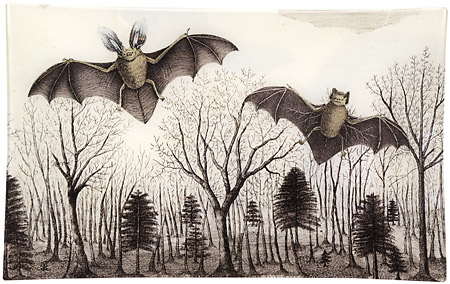 John Derian started producing gorgeous decoupage pieces by hand several years ago. Taking antique prints, letters, postcards and other antique papers, he created designs for glass trays, paper weights, and other items. Now, his designs are very popular in New York and around the country. Bergdorf Goodman and Saks Fifth Avenue as well as other fine retailers, carry his work. His little shop in downtown New York City has so many wonderful things that I am afraid to visit it too often. Next door, his impeccable sense of style is on display in a store featuring art, sculpture, and other items for the home. John Derian is amazing, as the tray shown here, from his Halloween collection, demonstrates. Visit him online or stop by his shops in New York.
To shop is human, to collect divine
 We admit that we're antiques junkies. Whenever we find ourselves in a new place, the first thing we look for are interesting antique shops. When others go hunting, we go antiquing. A well-collected interior brings interest and a story to a home, such as is the case with these Japanese paper dolls. Visitors to our house always ask us about them. Although they're small, they never escape notice. All in all, I've never regretted buying an antique that I love. I have, however, regretted walking away from one for one reason or another. Sometimes, the antiques I didn't buy stay with me more than those I did.
Wednesday, November 01, 2006
Adirondack Reader
 Among the greatest pleasures in life is reading a good book. Aside from reading them, books look wonderful almost anywhere in a well decorated house. They add visual interest, provide places to explore on a rainy afternoon, and reveal your style. The writer and photographer Ralph Kylloe has published some of the most beautiful books about Adirondack style and design. His new book, Adirondack Home, is our favorite. Our copy sits on our coffee table in the camp's living room for our guests to read. Sometimes I put it in the guest room to give the guests a visual introduction to the Park on their first night in the woods. For more on Ralph Kylloe, see www.ralphkylloe.com. By the way, there is a great little bookstore in Inlet called The Adirondack Reader. It is in the middle of town, near the Town Hall, across the street from the Tamarac Restaurant and movie theater. It is run by Reggie Chambers, a teacher and resident of the area for many years. It's not Barnes & Noble - and that's why we love it. Stop in to visit Reggie if you ever pass through Inlet.
The Perfect Little Balcony
 This is the balcony in our camp's guest suite, which we call the Hideout. The Hideout balcony is small but it works well for its intended purpose: a place to look out at the bay on Fourth Lake, to have coffee in the morning and read the newspaper. French doors lead to the balcony, so guests can open the doors and have a breeze and enjoy the view. It feels a little like being in a tree house, to sit on the balcony or rest on the bed just next to the doors. The chairs are from the Sundance Catalog, but have been discontinued. The balcony floor is made of fir. Shingles are cedar shakes, stained by hand in Evergreen. The pulley in the corner of this photo was used by our stone mason to haul granite up from the ground as he built our chimney. We try to set up as many opportunities as we can for our guests to appreciate the views, the silence, the air. This is one place they - and we - love to enjoy.
Sunday, October 29, 2006
One key to good design
 Many of you already know that we built a house in the Adirondacks, and so we thought we'd post some of our thoughts about home construction and design. I can safely say that I've never undertaken a project that was as rewarding as it was bewildering and frustrating, and it was definitely one of the rougher learning experiences of my life. Still, to build your home - particularly in a stunning physical setting - can be one of the most meaningful things you can do.
When we set out to build a house, we wanted it to look as if it had been part of its context for several decades, and we didn't want it to compete with the main house at Penwood, which was, after all, the real thing. One of the ways that we achieved this was to use antique doorknobs in the interior. Not only are they more beautiful than most doorknobs manufactured today, they are also far better (and usually less expensive). There's nothing like the feel of a solid brass doorknob coupled with an antique lockset and strikeplate. It's simply better than anything else you can buy today. Just remember that you'll need a fairly talented carpenter to install the locksets on your doors. And please don't be tempted to polish your doorknobs to make them look "new." A good patina is a big part of the charm (and value) of any antique, and doorknobs are no different. All you need do is oil the lockset a bit, and it will work as well as the day it was made. If after all this, you still want to use new doorknobs, then we recommend Rocky Mountain Hardware. They make an amazing product; just get ready for some sticker shock.
Subscribe to:
Posts (Atom)