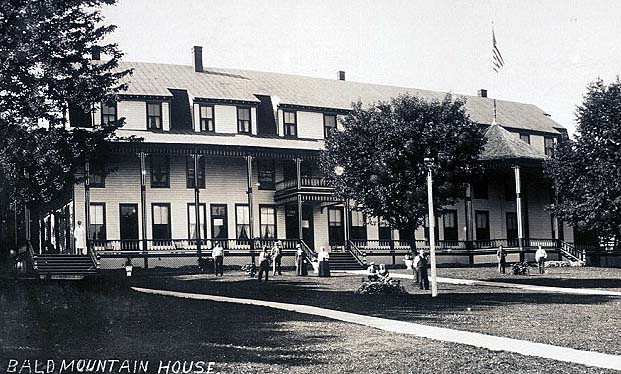
 The stately old Bald Mountain House sat on Third Lake by the entrance to the channel between Fourth Lake and Third Lake on the Fulton Chain. It was one of those big Adirondack hotels that sprung up in the park during and around the Great Camp era, supplying lodging to wealthy visitors from downstate and around the world. Now, it is with great sadness that we tell you that not only is this great old hotel gone, but it was years ago replaced by what we call "Tobacco Road" -- a collection of hideous trailers and mobile homes crammed into each other. It is truly an eyesore. If we could just turn back time. . .
Showing posts with label Second Lake. Show all posts
Showing posts with label Second Lake. Show all posts
Saturday, November 18, 2006
If we Could Turn Back Time
The stately old Bald Mountain House sat on Third Lake by the entrance to the channel between Fourth Lake and Third Lake on the Fulton Chain. It was one of those big Adirondack hotels that sprung up in the park during and around the Great Camp era, supplying lodging to wealthy visitors from downstate and around the world. Now, it is with great sadness that we tell you that not only is this great old hotel gone, but it was years ago replaced by what we call "Tobacco Road" -- a collection of hideous trailers and mobile homes crammed into each other. It is truly an eyesore. If we could just turn back time. . .

Benjamin Harrison, Adirondack President
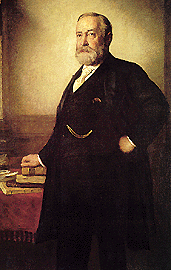
 A good portrait of President Benjamin Harrison, who built an Adirondack lodge on Second Lake on the Fulton Chain of Lakes, Herkimer County, New York. The camp was called Berkeley Lodge and later referred to as the Harrison House.
Friday, November 10, 2006
Adirondack Portraits: President Benjamin Harrison
President Harrison built an Adirondack lodge on Second Lake in the Fulton Chain, called Berkeley Lodge. Here is a little history about the President, from the White House website:
 Nominated for President on the eighth ballot at the 1888 Republican Convention, Benjamin Harrison conducted one of the first "front-porch" campaigns, delivering short speeches to delegations that visited him in Indianapolis. As he was only 5 feet, 6 inches tall, Democrats called him "Little Ben"; Republicans replied that he was big enough to wear the hat of his grandfather, "Old Tippecanoe."
Born in 1833 on a farm by the Ohio River below Cincinnati, Harrison attended Miami University in Ohio and read law in Cincinnati. He moved to Indianapolis, where he practiced law and campaigned for the Republican Party. He married Caroline Lavinia Scott in 1853. After the Civil War--he was Colonel of the 70th Volunteer Infantry--Harrison became a pillar of Indianapolis, enhancing his reputation as a brilliant lawyer.
The Democrats defeated him for Governor of Indiana in 1876 by unfairly stigmatizing him as "Kid Gloves" Harrison. In the 1880's he served in the United States Senate, where he championed Indians. homesteaders, and Civil War veterans.
In the Presidential election, Harrison received 100,000 fewer popular votes than Cleveland, but carried the Electoral College 233 to 168. Although Harrison had made no political bargains, his supporters had given innumerable pledges upon his behalf.
When Boss Matt Quay of Pennsylvania heard that Harrison ascribed his narrow victory to Providence, Quay exclaimed that Harrison would never know "how close a number of men were compelled to approach... the penitentiary to make him President."
Harrison was proud of the vigorous foreign policy which he helped shape. The first Pan American Congress met in Washington in 1889, establishing an information center which later became the Pan American Union. At the end of his administration Harrison submitted to the Senate a treaty to annex Hawaii; to his disappointment, President Cleveland later withdrew it.
Substantial appropriation bills were signed by Harrison for internal improvements, naval expansion, and subsidies for steamship lines. For the first time except in war, Congress appropriated a billion dollars. When critics attacked "the billion-dollar Congress," Speaker Thomas B. Reed replied, "This is a billion-dollar country." President Harrison also signed the Sherman Anti-Trust Act "to protect trade and commerce against unlawful restraints and monopolies," the first Federal act attempting to regulate trusts.
The most perplexing domestic problem Harrison faced was the tariff issue. The high tariff rates in effect had created a surplus of money in the Treasury. Low-tariff advocates argued that the surplus was hurting business. Republican leaders in Congress successfully met the challenge. Representative William McKinley and Senator Nelson W. Aldrich framed a still higher tariff bill; some rates were intentionally prohibitive.
Harrison tried to make the tariff more acceptable by writing in reciprocity provisions. To cope with the Treasury surplus, the tariff was removed from imported raw sugar; sugar growers within the United States were given two cents a pound bounty on their production. Long before the end of the Harrison Administration, the Treasury surplus had evaporated, and prosperity seemed about to disappear as well. Congressional elections in 1890 went stingingly against the Republicans, and party leaders decided to abandon President Harrison although he had cooperated with Congress on party legislation. Nevertheless, his party renominated him in 1892, but he was defeated by Cleveland.
After he left office, Harrison returned to Indianapolis, and married the widowed Mrs. Mary Dimmick in 1896. A dignified elder statesman, he died in 1901.
 Nominated for President on the eighth ballot at the 1888 Republican Convention, Benjamin Harrison conducted one of the first "front-porch" campaigns, delivering short speeches to delegations that visited him in Indianapolis. As he was only 5 feet, 6 inches tall, Democrats called him "Little Ben"; Republicans replied that he was big enough to wear the hat of his grandfather, "Old Tippecanoe."
Born in 1833 on a farm by the Ohio River below Cincinnati, Harrison attended Miami University in Ohio and read law in Cincinnati. He moved to Indianapolis, where he practiced law and campaigned for the Republican Party. He married Caroline Lavinia Scott in 1853. After the Civil War--he was Colonel of the 70th Volunteer Infantry--Harrison became a pillar of Indianapolis, enhancing his reputation as a brilliant lawyer.
The Democrats defeated him for Governor of Indiana in 1876 by unfairly stigmatizing him as "Kid Gloves" Harrison. In the 1880's he served in the United States Senate, where he championed Indians. homesteaders, and Civil War veterans.
In the Presidential election, Harrison received 100,000 fewer popular votes than Cleveland, but carried the Electoral College 233 to 168. Although Harrison had made no political bargains, his supporters had given innumerable pledges upon his behalf.
When Boss Matt Quay of Pennsylvania heard that Harrison ascribed his narrow victory to Providence, Quay exclaimed that Harrison would never know "how close a number of men were compelled to approach... the penitentiary to make him President."
Harrison was proud of the vigorous foreign policy which he helped shape. The first Pan American Congress met in Washington in 1889, establishing an information center which later became the Pan American Union. At the end of his administration Harrison submitted to the Senate a treaty to annex Hawaii; to his disappointment, President Cleveland later withdrew it.
Substantial appropriation bills were signed by Harrison for internal improvements, naval expansion, and subsidies for steamship lines. For the first time except in war, Congress appropriated a billion dollars. When critics attacked "the billion-dollar Congress," Speaker Thomas B. Reed replied, "This is a billion-dollar country." President Harrison also signed the Sherman Anti-Trust Act "to protect trade and commerce against unlawful restraints and monopolies," the first Federal act attempting to regulate trusts.
The most perplexing domestic problem Harrison faced was the tariff issue. The high tariff rates in effect had created a surplus of money in the Treasury. Low-tariff advocates argued that the surplus was hurting business. Republican leaders in Congress successfully met the challenge. Representative William McKinley and Senator Nelson W. Aldrich framed a still higher tariff bill; some rates were intentionally prohibitive.
Harrison tried to make the tariff more acceptable by writing in reciprocity provisions. To cope with the Treasury surplus, the tariff was removed from imported raw sugar; sugar growers within the United States were given two cents a pound bounty on their production. Long before the end of the Harrison Administration, the Treasury surplus had evaporated, and prosperity seemed about to disappear as well. Congressional elections in 1890 went stingingly against the Republicans, and party leaders decided to abandon President Harrison although he had cooperated with Congress on party legislation. Nevertheless, his party renominated him in 1892, but he was defeated by Cleveland.
After he left office, Harrison returned to Indianapolis, and married the widowed Mrs. Mary Dimmick in 1896. A dignified elder statesman, he died in 1901.
Wednesday, November 08, 2006
Renovated Pine Acres Boat House, Second Lake
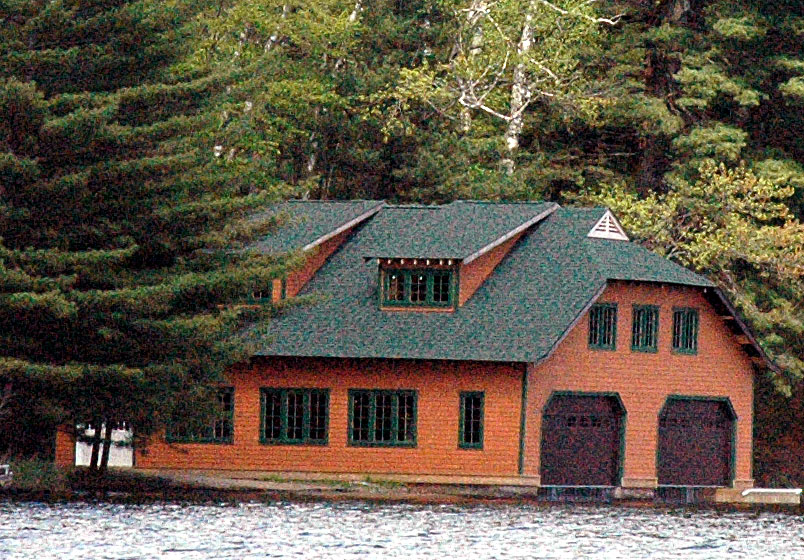 The Pine Acres estate on Second and Third Lakes on the Fulton Chain was sold recently and substantially renovated. Here, the boat house, which for years sat unused and in disrepair, has been fully and expensively renovated. It is an unusually large boat house, having many windows, what appears to be two levels, and exceptional finishes.
Saturday, October 28, 2006
President Benjamin Harrison's Adirondack Lodge

President Benjamin Harrison was an avid outdoorsman and loved the Adirondacks. He purchased a piece of property on Second Lake in the Fulton Chain of lakes near Old Forge and built a true Adirondack lodge, which appears in a photo at right. The President's home fell into disrepair in later years. It was most recently owned by Sarah Cohen and her sister Linda Cohen, whose family founded the venerable Old Forge Hardware store generations before. The house was known as the Harrison House or Berkeley Lodge. The Cohen sisters recently sold the lodge as well as the adjoining estate where they grew up, Pine Acres. The new owners restored Harrison House successfully in 2005.
Subscribe to:
Posts (Atom)